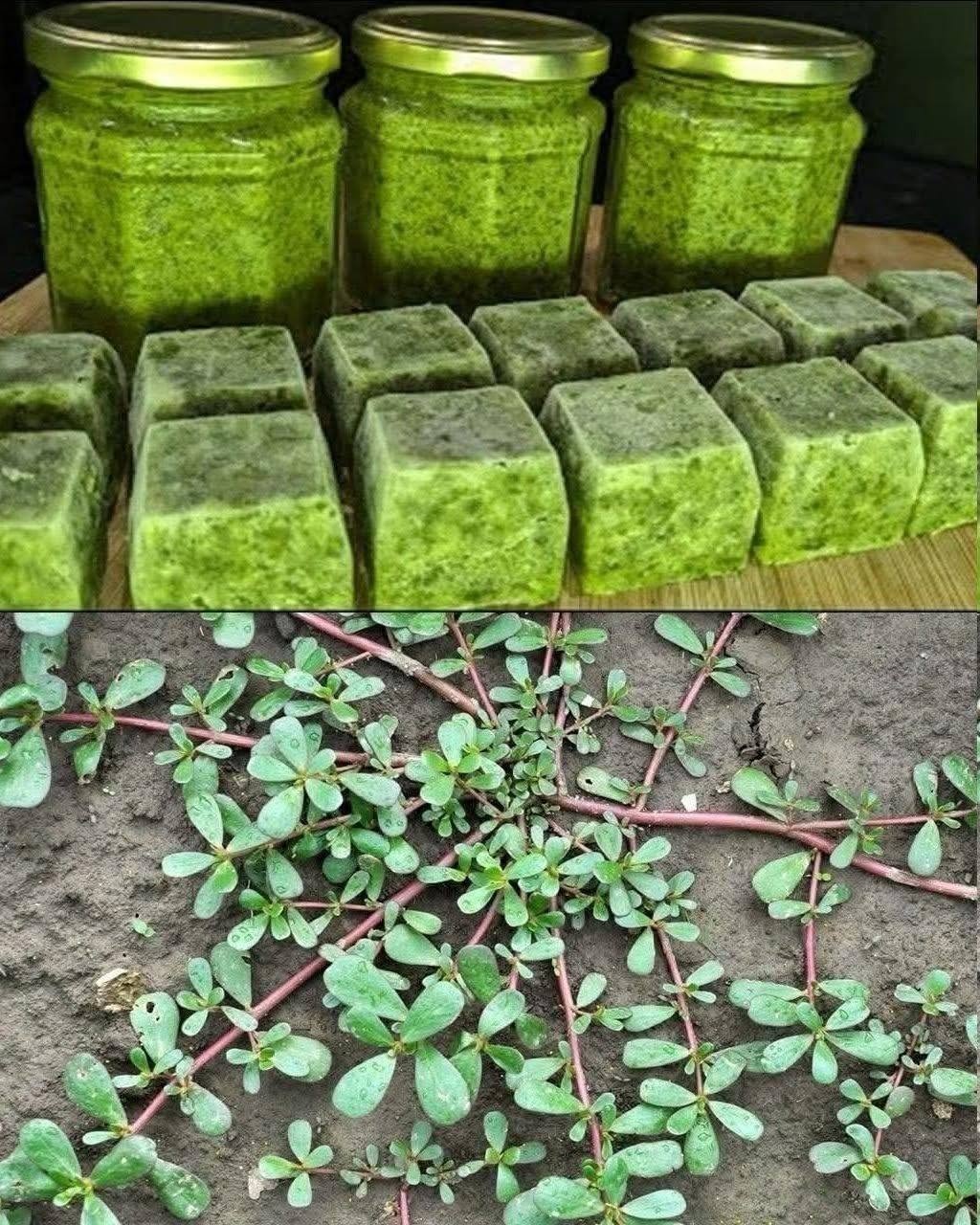
Purslane (Portulaca oleracea) is a resilient, trailing annual succulent characterized by small tear-shaped green leaves, reddish stems, and a crisp, slightly tart flavor. Though often categorized as a common weed in gardens and urban cracks, chemical analysis demonstrates that purslane is one of the most nutrient-dense wild greens available. Its array of essential lipids, antioxidants, and minerals offers evidence-based physiological support, particularly during the metabolic and structural changes that occur after age 60.
🔬 The Bio-Chemical Matrix of Purslane
The primary scientific interest in Portulaca oleracea centers on three key nutrient groups targeting age-related cellular pathways:
1. Plant-Based Omega-3 Fatty Acids (Alpha-Linolenic Acid)
Purslane contains an exceptionally high concentration of alpha-linolenic acid (ALA)—supplying roughly 300 mg to 400 mg per 100 g of fresh leaves—which surpasses virtually all other cultivated leafy greens.
Mechanism of Action: ALA serves as an essential structural unit for lipid bilayers in cell membranes. Upon consumption, a portion of dietary ALA converts to longer-chain omega-3s (EPA and DHA). These lipids inhibit the production of pro-inflammatory eicosanoids and cytokines, counteracting chronic, low-grade systemic inflammation (inflammaging) that accelerates arterial stiffening and cellular decline.
2. Multi-Tiered Antioxidant Network:
LOOK NEXT PAGE DEAR──►
For Complete Cooking STEPS Please Head On Over To Next Page Or Open button (>)